


Mako - Live Streams&Chat
3.160.00 Reviews
App Specs
- Version
- 2.3.3
- Updated On
- License
- Free
- Downloads
- 10,000,000+
- Developer
- MatchU Team
- Categories
- Social
- Platform
- Android
Screenshots


 Analysis by AppCompare
I approached Mako - Live Streams&Chat as a social app for people who want more than a silent feed. Its central idea is simple: meet people through live video, chat while you watch, and add playful interaction to conversations that might otherwise feel flat. After spending time with it, my view is that Mako is most appealing when you treat it as a spontaneous place to discover personalities, not as a polished replacement for every messaging or streaming service you already use.
The app sits in the social category and comes from MatchU Team. It is free to install, with optional purchases ranging from $0.99 to $199.99 per item. That pricing detail matters because the basic download is easy to try, but users should approach the more visible paid elements carefully. Mako is marked Mature 17+, which fits the live, user-to-user nature of the experience and is an important reminder that it is not designed as a casual children’s chat app.
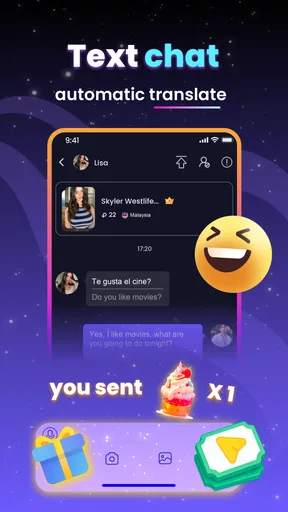
Its public store summary describes video connections with friends around the world, plus chat and play. In practice, that combination gives Mako a different feel from a standard text messenger. You are not only sending a message and waiting for a reply; you are entering a more immediate social space where the appeal depends heavily on who is online, how comfortable you are with live interaction, and whether you enjoy conversations that develop without much planning.
What makes the live format worthwhile
The strongest part of Mako is the sense of presence created by video. Text can be convenient, but it also leaves plenty of room for misunderstandings and awkward pauses. A live connection gives you facial reactions, timing, and a better impression of someone’s mood. That makes even a short exchange feel more personal than a sequence of typed messages.
I also like the way the app’s chat-and-play concept lowers the pressure of conversation. When two people do not know what to say, a shared activity can provide a natural starting point. Instead of forcing an interview-style conversation, you can react to what is happening, exchange quick comments, and let the interaction find its own rhythm. For users who dislike the formality of traditional introductions, this is a meaningful advantage.
Mako is particularly suited to short visits. I can imagine opening it during a break, browsing for a while, joining a conversation that looks interesting, and leaving without having to commit to a long social session. That makes it more flexible than arranging a video call with friends, where everyone has to agree on a time and stay available. The trade-off is that spontaneous socializing is less predictable: the quality of a session depends on the people available at that moment.
Another useful strength is the international angle. Connecting with people from different places can expose you to different humor, routines, and ways of communicating. However, the same feature can create friction through language differences, time zones, and different expectations about how quickly a conversation should become personal. I found that Mako works best when I enter with curiosity rather than a fixed idea of the kind of person I will meet.
Worth Reading Before You Choose

EA SPORTS FC Mobile 26 Is a Bigger Football Game, but It Takes Time

Flipboard Shows What News Apps Must Do Beyond the Feed

Switching to Android Auto Means Rethinking Your Driving Routine

Google Calendar Makes a Crowded Week Easier to Manage

Ludo King Makes the Most of the Minutes Between Plans

Baby Panda World Brings Quick Play to Modern Phones, but Its Game Library Feels Busy
A practical tip is to decide what kind of interaction you want before opening the app. If I am looking for a relaxed conversation, I pay attention to the atmosphere of a room or live session rather than joining the first option available. If I only have a few minutes, I avoid starting an exchange that seems likely to require sustained attention. This small habit makes the experience feel more intentional and reduces the chance of leaving because the first interaction was not a good fit.
How I would use it on an ordinary day
Imagine finishing work or classes and wanting company without arranging a formal call. A conventional messenger might show that your friends are busy, while a social network may give you plenty of posts but no real conversation. Mako offers a middle ground: open the app, look for a live interaction, and decide whether you want to participate. If the exchange feels uncomfortable or uninteresting, you can move on more easily than you could in a scheduled call.
That scenario also shows the app’s main emotional appeal. It can make a quiet moment feel less isolated, especially for people who enjoy meeting strangers but do not want to write a carefully prepared profile or send a series of introductions. The live format creates opportunities for immediate chemistry. It can also produce immediate awkwardness, so I would not recommend treating every connection as meaningful simply because it happens on video.
The play element helps with that uncertainty. Even a basic shared activity can give both people something to focus on, which is useful when neither person is naturally talkative. My advice is to use those activities as conversation starters, not as a substitute for judging whether the other person is respectful and worth continuing with. A game-like interaction can make the first minutes easier, but it does not remove the need for ordinary social boundaries.
Where Mako feels less comfortable
The biggest weakness is that live social interaction can be uneven. A carefully designed messaging service gives you time to edit your words, choose when to answer, and control how much of yourself you reveal. Mako asks for a quicker response and a greater level of presence. That immediacy is its selling point, but it is also the reason some users may find the app tiring rather than entertaining.
People who prefer asynchronous communication should think carefully before making Mako their main social app. If you want to send a message and return hours later, a standard messenger will usually be more comfortable. If you want to watch professional broadcasts with consistent production, a dedicated streaming platform is likely a better choice. Mako’s value is in social contact, not in replacing those more focused services.
There is also a natural quality-control challenge in a platform built around meeting people. Not every conversation will be engaging, and not every person will communicate in the way you expect. I would keep personal details private until trust has been earned, avoid moving too quickly into off-platform contact, and leave an interaction as soon as it becomes pressuring or disrespectful. Those are not reasons to reject the app, but they are essential habits for using any live social service responsibly.
The Mature 17+ label should be taken seriously rather than treated as a decorative store notice. I would not install Mako on a younger user’s device or assume that live video makes an interaction automatically safe. Adults should still use judgment around identity, requests for money, uncomfortable questions, and attempts to rush intimacy. The app can create friendly connections, but no social platform can guarantee that every person you encounter has good intentions.
Purchases are another area where restraint helps. Since optional items can cost from $0.99 up to $199.99, I would decide in advance whether I am willing to spend anything and keep that decision separate from the excitement of a live interaction. A purchase should not become a way to earn attention or prove interest. Users who prefer completely predictable spending may be happier with an app that does not place optional digital items so prominently in the social experience.
Small habits that improve the experience
One of my most useful recommendations is to treat the first interaction as a test, not a commitment. Spend enough time to judge the tone, but do not feel obligated to continue because someone responded to you. This is especially helpful in live video, where politeness can make people stay longer than they want. A quick exit is better than remaining in an uncomfortable conversation.
I would also separate discovery from friendship. Meeting someone interesting is only the beginning; a reliable friendship requires repeated respectful behavior over time. Mako is good at creating the first moment of contact, but users should not confuse an entertaining session with proof that they know the other person well. That distinction protects both privacy and expectations.
Another practical approach is to use the chat-and-play side of the app when conversation feels forced, then return to ordinary chat when you want to learn more about someone. Shared activity can reveal how a person reacts to winning, losing, waiting, or disagreement. Those small moments can tell you more than a polished introduction, although I would still avoid treating them as a complete picture of someone’s character.
For users with limited patience for interruptions, I suggest opening Mako only when you can give it a little attention. Live video is not ideal while driving, studying, working, or handling anything that requires concentration. The app’s format rewards presence. Trying to use it as background noise may lead to missed context and disappointing conversations.
Who should try it, and who should skip it
I think Mako is a good match for adults who enjoy spontaneous conversations, are comfortable with video, and want to meet people beyond their existing circle. It is especially suitable for someone who finds ordinary dating-style introductions too rigid or text-only social networks too passive. The combination of live contact and playful interaction gives those users a reason to participate rather than simply scroll.
It may also work well for people who have friends in different countries and want a more immediate way to stay socially active. The international focus can make a short session feel like a change of scenery. Still, expectations should remain realistic: availability, communication style, and the quality of connections will vary, so the app is better approached as an opportunity for discovery than as a guaranteed way to build close friendships.
I would skip it if you strongly dislike appearing on camera, feel drained by meeting strangers, or want a platform with highly predictable content. It is also not the best choice for anyone seeking a private, controlled group chat with people they already know. In that situation, a conventional messenger offers clearer boundaries and less uncertainty.
The audience should also consider spending preferences. Free access makes experimentation straightforward, but the optional purchase range means I would not hand the app to someone who tends to make impulsive digital purchases. Set device-level spending controls if necessary, and remember that paying for an item does not create a genuine personal connection.
Performance, access, and overall value
Mako supports devices running Android 7.0 or later, which keeps it accessible to many older phones. The current version is 2.3.3. Because live video depends on more than the app itself, the experience will naturally feel better with a stable connection and a device that handles camera use comfortably. I would also expect battery use and mobile data consumption to matter more here than in a text-only social app, so a long session is better on Wi-Fi when possible.
The app has passed the ten-million-install mark, so it is not an obscure experiment with no established audience. At the same time, its average rating is 3.1 from around sixteen thousand ratings, which suggests a mixed public experience rather than universal satisfaction. I read that as a reason to try Mako with modest expectations: there is clearly enough interest to support a large community, but popularity alone does not guarantee that every visit will feel smooth or rewarding.
There are around sixty written reviews shown publicly, but I would give more weight to recurring patterns in your own use than to any single comment. Live social apps can feel completely different depending on time, location, language, and the kind of people you choose to engage with. A disappointing first session is not definitive, yet repeated friction is a fair signal that the format may not suit you.
What I appreciate is that the app does not need to replace anything immediately. You can keep using your usual messenger, social network, or streaming service and treat Mako as an additional way to meet people. That makes the free entry point useful: try it during several different moments rather than judging it after one rushed opening. If the live format consistently creates enjoyable conversations, it has earned a place in your routine. If it mostly creates noise or discomfort, uninstalling it is a sensible decision.
My verdict after weighing the trade-offs
Mako - Live Streams&Chat has a clear personality: it is built around immediate human contact, not passive browsing. Its best moments come from the combination of video, chat, and play, especially when you want an unplanned conversation and are willing to accept that not every connection will be memorable. The international social angle adds variety, while the free installation makes it easy to test without an upfront commitment.
My reservations are equally clear. Live interaction demands confidence and attention, the quality of encounters can vary, and the optional purchase range calls for careful self-control. The Mature 17+ rating is appropriate, and I would use the app with firm privacy boundaries rather than assuming that a friendly exchange is automatically trustworthy.
For an adult who wants spontaneous video connections and enjoys the unpredictability of meeting new people, I think Mako is worth trying. For someone seeking polished broadcasts, quiet private messaging, or tightly controlled social circles, another type of app will be a better fit. My final recommendation is therefore selective: give it a fair trial, use the chat-and-play format as a way to break the ice, protect your personal information, and judge it by the quality of your actual conversations rather than by the promise of endless connection.
Pros
- Easy access to live streams from a wide range of creators and categories.
- Real-time chat makes it simple to interact with streamers and other viewers.
- Personalized recommendations help you discover broadcasts matching your interests.
- The interface is straightforward and easy to navigate for new users.
- Supports social interaction through follows
- comments
- and community engagement.
Cons
- Stream quality can vary considerably depending on the creator’s connection.
- Busy chats may become difficult to follow during popular live broadcasts.
- Some features or content may require in-app purchases or subscriptions.
- Users may encounter repetitive or low-quality streams among recommendations.
- Live content can consume significant mobile data and battery power.
FAQs for Mako - Live Streams&Chat
What is Mako - Live Streams&Chat, and what can I do with it?
Mako - Live Streams&Chat is a social entertainment app focused on watching live broadcasts and interacting with streamers and other viewers. After installing it, users can explore available live rooms, send messages in chat, follow creators, and participate in an active community. Depending on the streamer and region, broadcasts may include conversation, gaming, music, lifestyle content, or other forms of real-time entertainment.
Do I need to create an account to watch live streams on Mako?
You may be able to browse or watch some public streams without completing a full registration, but an account is generally useful for accessing the app’s interactive features. Signing in can allow you to follow streamers, participate in chats, receive notifications, and maintain your preferences across sessions. Registration requirements and available login methods may vary by device, location, and the current version of the app.
Is Mako - Live Streams&Chat free to download and use?
Mako can typically be downloaded without an upfront charge, although some features may involve optional in-app purchases. Live-streaming platforms commonly offer digital gifts, virtual currency, premium interactions, or other paid items that support creators or unlock additional functionality. Before confirming a purchase, review the displayed price and your store settings, especially if children or other users share access to the device.
Is Mako safe for chatting with streamers and other users?
As with any public live-chat platform, your experience depends partly on how carefully you use the app. Avoid sharing private information such as your address, phone number, passwords, or financial details. Use available blocking and reporting tools if you encounter harassment, scams, or inappropriate behavior, and check the app’s community rules and privacy policy. Parents should also review the content and chat environment before allowing younger users to participate.
What permissions and internet connection does Mako require?
Mako requires an internet connection to load live broadcasts, send chat messages, and update stream information, so performance may vary between Wi-Fi and mobile data. The app may request permissions related to notifications, camera, microphone, or storage if you use interactive or broadcasting features. It is sensible to review each permission request and disable access that is not needed for the way you intend to use the application.


